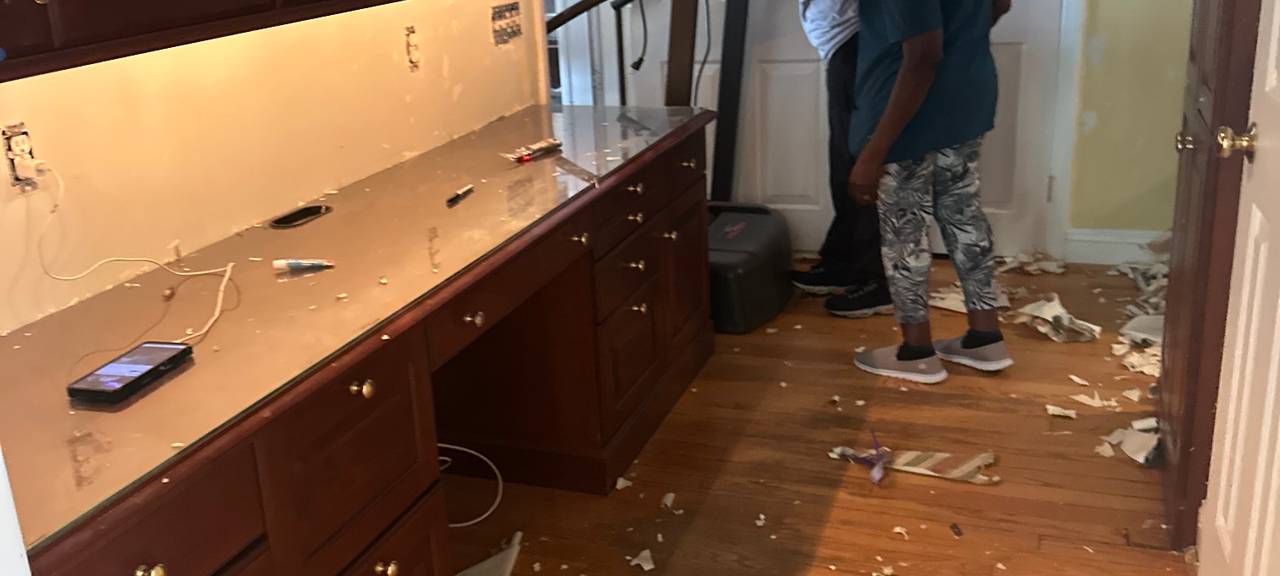
Older homes across Chester and Delaware Counties are full of wallpaper from the 70s, 80s, and 90s. Sooner or later somebody wants it gone — and the tempting shortcut is to prime over it and paint. That works for about a year, until the paper's seams swell, the edges lift, and every joint shows as a raised line across the wall.
Proper removal starts with identifying the paper. Strippable vinyl often peels off dry in full sheets. Older paper-backed and painted-over wallpaper doesn't — it needs to be scored, soaked with a solvent or steamed, and worked off in pieces. Trying to force dry paper off a wall is how drywall paper gets torn, which turns a removal job into a repair job.
Once the paper is off, the adhesive is still there. It has to be washed off completely, because dried wallpaper paste reactivates under fresh paint and causes bubbling and poor adhesion. This is the step most DIY removals stop one measure short of.
Then you find out what the wall actually looks like. In a lot of older homes, the drywall was never primed before papering, so the paper facing tears during removal and leaves fuzzy, damaged sections. Those need to be sealed, skim-coated, and sanded flat before anything else happens. Plaster walls behind old paper frequently have cracks that were simply covered up.
The finished sequence is: strip, wash, repair, skim-coat, sand, prime. Then, and only then, paint or hang new paper. It's more work than people expect, and it's the difference between a wall that looks new and a wall that looks like it used to have wallpaper.
Roypainting Service LLC handles wallpaper removal, the drywall restoration behind it, and the new paint or paper that goes on afterward — all with the same crew. Call (610) 840-4539 for a free estimate.